.webp) popgameh5.com
popgameh5.comFabledom Tips & Guide: Complete Beginner to Advanced Strategy

Fabledom is a cozy city-building and kingdom-management game set in a colorful fairytale world. You take on the role of a ruler tasked with transforming a humble settlement into a thriving kingdom. Along the way, you must gather resources, construct homes, provide essential services, manage your population, and establish relationships with neighboring rulers.
Although Fabledom has a charming visual style, building a successful kingdom requires careful planning. Every decision affects the development of your settlement, from choosing where to place residential buildings to deciding how much food and other resources your population needs. Expanding too quickly can create shortages, while neglecting infrastructure can prevent your kingdom from reaching its full potential.
This Fabledom tips and guide covers the essential mechanics, from establishing your first settlement to managing a growing kingdom. Whether you are a beginner learning the basics or an experienced player looking to improve your city layout, these strategies will help you build efficiently, maintain a happy population, and develop a prosperous fairytale kingdom.
1. Understand the Core Gameplay Loop
The main gameplay loop in Fabledom revolves around gathering resources, constructing buildings, managing citizens, and expanding your settlement. You begin with a small population and limited infrastructure, then gradually unlock new buildings and production opportunities as your kingdom develops.
Your first priority should be establishing a stable settlement. Citizens need housing, food, and access to essential services. Without these foundations, population growth and economic development can become difficult to sustain.
As your settlement grows, you will need to balance construction with resource production. Building too many structures at once can drain your supplies, while expanding too slowly may limit your ability to meet new objectives.
A productive gameplay cycle generally follows this sequence:
- Inspect the starting area and identify suitable building locations.
- Establish housing and essential production buildings.
- Gather wood, food, and other basic resources.
- Provide services that improve the population's living conditions.
- Monitor resource consumption and production rates.
- Complete objectives and unlock additional buildings.
- Expand the settlement when your economy can support it.
Start Small and Build a Stable Foundation
Avoid trying to create a large city immediately. A compact settlement is easier to manage because its production chains, housing, and services are concentrated in a smaller area.
Begin with a few essential buildings and expand only when you understand how your current economy functions. This makes it easier to identify shortages and adjust production before they become serious problems.
Learn the Purpose of Each Building
Different structures serve different roles. Residential buildings provide homes, production buildings generate resources, and service buildings improve the living conditions of your citizens.
Before constructing a new building, consider what problem it solves. A structure that does not support your current needs may consume resources or occupy valuable space without providing an immediate benefit.
Understanding these roles early will help you make more deliberate decisions as your kingdom grows.
2. Manage Resources and Establish a Reliable Economy
Resource management is one of the most important aspects of Fabledom. Your settlement depends on a steady supply of materials and goods to support construction, maintain production, and satisfy the needs of your population.
Wood and food are particularly important during the early stages of development. Wood supports construction, while food helps sustain your citizens. As the kingdom expands, additional resources and production chains become increasingly important.
Before starting a major building project, check your available supplies. If a construction plan requires more materials than you can comfortably spare, consider gathering additional resources first.
Monitor Production and Consumption
A resource surplus can provide flexibility, but excessive production may waste valuable space and labor. On the other hand, producing too little can create shortages that disrupt your settlement.
Pay attention to the relationship between what your kingdom produces and what it consumes. If a resource is consistently running low, identify whether the problem comes from insufficient production, increasing population demand, or an inefficient production arrangement.
Useful resource management habits include:
- Checking resource stocks before beginning major construction.
- Expanding production when demand increases.
- Keeping a reserve of essential materials.
- Avoiding unnecessary buildings that consume scarce resources.
- Reviewing production whenever the population grows significantly.
Build a Balanced Economy
A healthy economy requires more than producing large quantities of a single resource. Your settlement needs a balanced supply of materials, food, and other goods that support different aspects of development.
Avoid investing all your resources in one production chain. Instead, identify the goods that are essential to your current objectives and maintain enough production capacity to support them.
As your economy becomes more stable, you can gradually diversify production and prepare for more advanced construction projects.

3. Plan Your City Layout and Manage Space
City layout has a major influence on how efficiently your kingdom develops. Buildings occupy space, and the arrangement of residential areas, production facilities, and services can affect how convenient your settlement is to manage.
Before placing structures, take a moment to inspect the terrain and available building space. Look for areas that can accommodate future expansion and consider how different districts might fit together.
A well-organized settlement is easier to expand than one built without a plan. Even if you prefer a natural, fairytale-inspired appearance, maintaining a basic layout strategy can prevent unnecessary rebuilding later.
Separate Residential and Production Areas
Residential buildings benefit from a pleasant environment and access to appropriate services. Production buildings, meanwhile, need enough space to operate and support the settlement's economy.
Consider grouping similar buildings into convenient districts. A residential area can contain homes and nearby services, while production facilities can occupy a separate section of the settlement.
This arrangement helps you maintain a clear structure without requiring every building to follow a rigid grid.
Leave Room for Future Development
One of the most common city-building mistakes is using every available space during the early game. As new buildings become available, you may discover that your settlement lacks room for important upgrades.
Reserve open areas for future housing, production facilities, and services. You do not need to predict every building you will eventually construct, but leaving some flexibility can save considerable effort.
When expanding, consider how new buildings will connect to existing districts and whether their placement will create problems for future development.
4. Build Housing and Maintain Population Happiness
Your citizens are the foundation of your kingdom. They contribute to the settlement's development and create demand for housing, food, services, and other resources.
Housing is essential because it provides places for citizens to live and supports population growth. However, building more homes does not automatically guarantee a successful settlement. You must also ensure that your economy can support the additional population.
As the population increases, demand for essential goods and services rises. If you expand housing too quickly, you may struggle to maintain sufficient production or provide the services needed to keep citizens satisfied.
Expand Housing Gradually
Start with enough housing to support your immediate population needs, then expand when your resource production and services are ready.
Before adding another residential area, check whether your current settlement has sufficient food, materials, and access to essential facilities. A stable population is easier to manage than one that grows faster than the economy can support.
If your settlement begins experiencing shortages after a population increase, prioritize addressing those shortages before constructing additional homes.
Improve Living Conditions
Population happiness is influenced by the conditions in which citizens live. Housing, services, and access to necessary goods all contribute to the overall quality of your settlement.
When citizens become dissatisfied, investigate the cause instead of adding random buildings. A specific shortage or missing service may be responsible for the problem.
Improving the right part of your settlement can help restore stability while avoiding unnecessary construction costs.
5. Develop Food Production and Essential Services
Food production is a fundamental part of maintaining a stable kingdom. Your population needs a dependable supply of food, and an unreliable food economy can interfere with growth and development.
Establish food production early and monitor whether it can meet the needs of your current population. As your settlement expands, you may need additional farms or other food-producing structures to maintain a comfortable supply.
Food production should be planned alongside housing. Every new residential area increases demand, so it is important to ensure that production capacity grows at a suitable pace.
Create a Reliable Food Supply
Avoid relying on a single production building if it cannot comfortably support your population. Instead, develop a food system that provides enough output to handle ordinary demand and occasional increases in consumption.
When planning food production, consider the space available for agricultural buildings and how they fit into your overall settlement layout.
If food supplies begin declining, prioritize increasing production or addressing the source of the shortage before expanding housing further.
Support Essential Services
Beyond food and housing, your citizens may require services that improve their quality of life and support the development of your settlement.
Plan service buildings around the areas where they are most useful. Placing them near residential districts can help create a more convenient and organized city.
As new services become available, evaluate whether they address an existing need or unlock an important stage of progression. Prioritizing useful services helps you avoid spending resources on buildings that do not support your current goals.
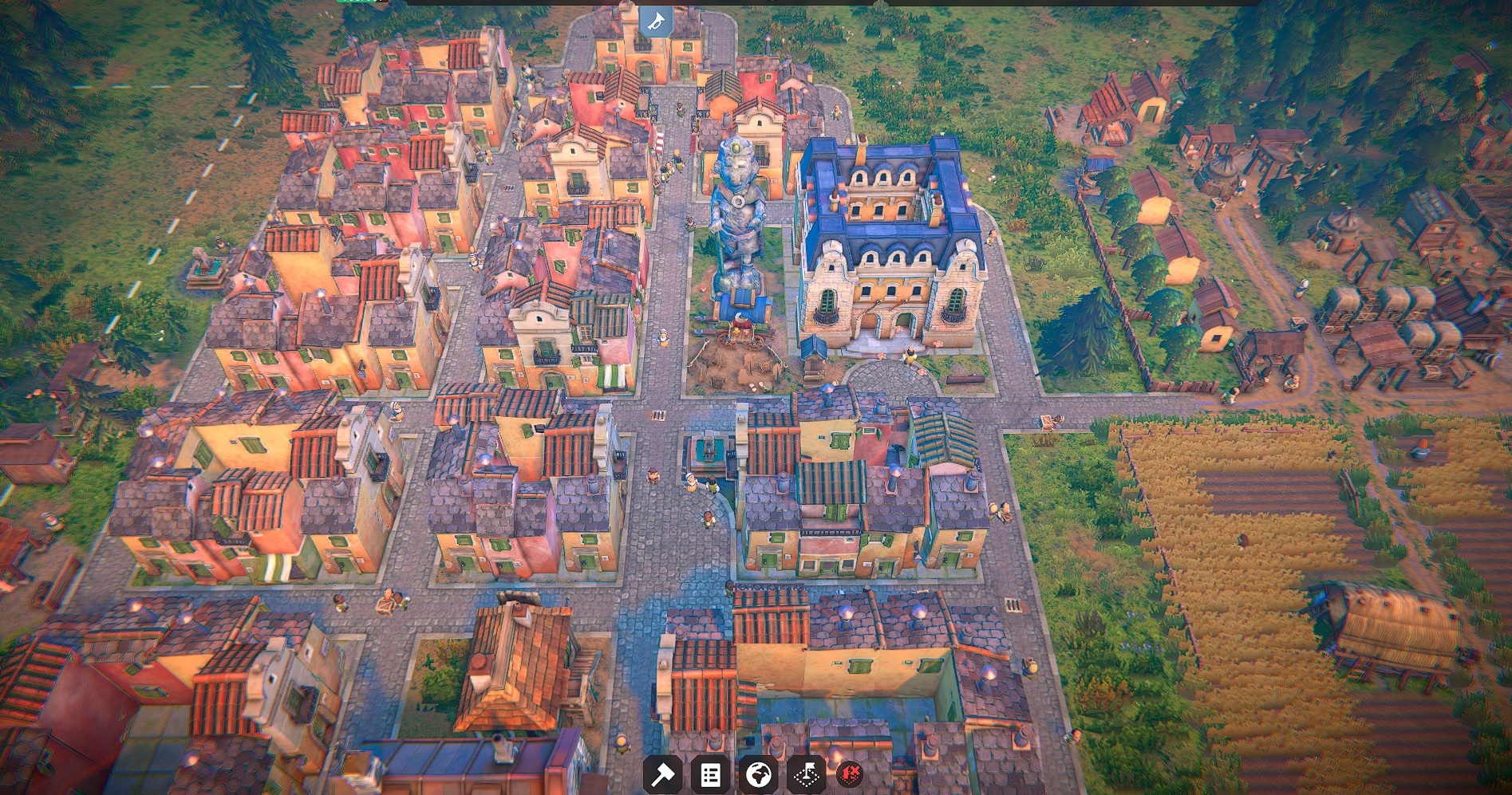
6. Unlock Buildings and Progress Through Objectives
Progression in Fabledom is closely connected to developing your settlement and meeting various objectives. As your kingdom grows, you gain access to additional structures, production opportunities, and systems that support more advanced development.
Objectives provide a useful guide for deciding what to build next. They can introduce new mechanics and encourage you to improve specific parts of your settlement.
However, completing an objective should not come at the expense of your entire economy. If a requirement demands a large amount of resources, make sure your kingdom can afford the investment without creating shortages elsewhere.
Use Objectives to Guide Expansion
Review your current objectives regularly and identify which ones contribute directly to your next development milestone.
Some objectives can be completed naturally as your settlement grows, while others may require a deliberate investment in a particular building or resource.
When several objectives are available, prioritize those that unlock useful features or support the stability of your economy.
Avoid Rushing Unlocks
It can be tempting to focus entirely on unlocking advanced buildings. However, new structures are only useful if your settlement has the resources and infrastructure needed to support them.
Before pursuing an expensive unlock, check whether your existing production and population needs are under control.
A strong foundation makes later progression easier because you can invest in new features without constantly repairing shortages in your basic economy.
7. Improve Production Efficiency and Organize Work Areas
As your settlement expands, production efficiency becomes increasingly important. Buildings must generate enough resources to support construction, population growth, and the development of additional districts.
An efficient production system uses space carefully and maintains a reliable flow of essential goods. Instead of placing buildings wherever space happens to be available, consider how each structure contributes to the broader economy.
Grouping related production buildings can make your settlement easier to understand and maintain. It also helps you identify which parts of the economy need additional capacity.
Identify Bottlenecks in Production
A bottleneck occurs when one part of your economy cannot keep up with the demand created by other activities. For example, a construction project may stall because it requires a material that your settlement produces too slowly.
When progress slows down, identify the specific resource or production stage responsible. Increasing output in the wrong area will not solve the underlying problem.
A practical troubleshooting process is:
- Identify the resource that is running low.
- Check which buildings produce that resource.
- Determine whether production capacity is sufficient for current demand.
- Expand or improve the relevant production system.
- Recheck the resource balance after the change.
Keep Production Proportional to Demand
More production is not always better. Building too many facilities can use space that would be more valuable for housing or other services.
Expand production when demand justifies it. If a resource remains consistently abundant, consider directing your attention toward a different part of the economy.
A balanced production system is easier to manage and leaves more flexibility for future construction.
8. Build Relationships and Manage Diplomacy
Fabledom includes diplomatic relationships with neighboring rulers, adding another layer to kingdom management. Your interactions with other leaders can influence the opportunities available to your settlement and contribute to the game's broader progression.
Diplomacy is not separate from the rest of your kingdom. Your ability to pursue diplomatic objectives depends partly on the stability of your economy and the resources available to support your plans.
As you encounter other rulers, pay attention to the available interactions and any requirements associated with improving relationships.
Understand Each Ruler's Role
Different rulers may offer distinct interactions, objectives, or relationship opportunities. Learning about neighboring kingdoms helps you understand which diplomatic activities are available and how they fit into your broader goals.
When a new interaction becomes available, review its requirements before committing resources. Some actions may be easier to pursue after your settlement has developed further.
Balance Diplomacy With Domestic Development
Diplomatic progression should complement your kingdom's growth rather than undermine it.
If an interaction requires resources that are essential to your population, consider postponing it until your economy has a comfortable reserve.
Maintaining a stable settlement gives you greater flexibility when pursuing relationships with other rulers and completing objectives connected to diplomacy.

9. Manage Expansion, Construction Costs, and Long-Term Stability
Expanding a kingdom creates opportunities for growth, but every new building introduces additional demands on your resources and available space.
A successful expansion strategy considers not only what a new district will provide but also what it will cost to maintain. Housing increases population demand, production facilities consume building space, and service buildings require careful placement.
Before beginning a major expansion, review the current condition of your settlement and identify the resources needed to complete the project.
Expand in Manageable Stages
Instead of constructing a large number of buildings at once, divide expansion into smaller stages.
For example, you might establish a new residential district, strengthen food production, and then add the services needed to support the larger population.
This approach allows you to evaluate the effects of each stage before committing to the next one.
If a shortage develops, you can address it immediately rather than trying to repair several problems at once.
Maintain a Flexible Settlement
Your kingdom will change as new buildings and objectives become available. A layout that works during the early game may need adjustments later.
Leave space for additional housing and infrastructure, and avoid committing every available resource to a single project.
A flexible settlement can adapt to new requirements without forcing you to redesign the entire city.
10. Prepare for Advanced Kingdom Management and Late-Game Progression
As your kingdom develops, the focus shifts from establishing basic infrastructure to maintaining a stable and increasingly complex settlement.
At this stage, you should have a clearer understanding of resource production, population needs, building placement, and progression requirements. The main challenge is balancing these systems while continuing to expand.
Rather than constantly constructing new buildings, review the performance of your existing settlement. Identify weak points in the economy and determine which improvements would provide the greatest practical benefit.
Strengthen Your Existing Infrastructure
Late-game development becomes easier when your basic systems are reliable.
Check whether food production can support your population, whether construction materials are available in sufficient quantities, and whether residential areas have access to appropriate services.
If one part of the settlement consistently struggles, address that problem before beginning another major expansion.
Improving existing infrastructure can create a more dependable foundation for advanced construction and long-term objectives.
Set Clear Long-Term Goals
A clear set of goals helps you manage a large settlement without becoming overwhelmed by the number of available activities.
You might focus on completing remaining objectives, expanding residential districts, improving production capacity, or developing relationships with neighboring rulers.
Choose a few goals at a time and organize your construction around them. This makes it easier to track progress and avoid unnecessary spending.
Refine Your Kingdom's Layout and Economy
Once your settlement is stable, you can focus on improving its overall design and efficiency.
Reorganize districts where necessary, improve production balance, and use available space more effectively. You can also invest in aesthetic improvements that give your kingdom a more distinctive fairytale appearance.
The goal is to create a settlement that is both functional and enjoyable to develop, with an economy capable of supporting continued growth.
Conclusion
Fabledom combines fairytale charm with strategic city-building and kingdom management. Building a successful settlement requires careful resource planning, thoughtful city layouts, reliable food production, and a population whose needs are consistently met.
The most effective approach is to establish a stable foundation before expanding too quickly. Prioritize essential resources, build housing in manageable stages, monitor production, and use objectives to guide your development.
As your kingdom grows, focus on maintaining a balanced economy and leaving enough space for future construction. By combining efficient planning with gradual expansion, you can transform a small settlement into a prosperous fairytale kingdom while enjoying the creative freedom that makes Fabledom distinctive.
Description (160 characters): Master Fabledom with tips for resource management, city planning, population happiness, food production, diplomacy, and building a thriving fairytale kingdom.